B.S. in Biophysics
The B.S. in Biophysics brings physics, biology, chemistry, and biochemistry together to study living systems quantitatively. Students develop a strong foundation in physics while learning how physical principles apply to molecules, cells, tissues, and disease. The curriculum supports further study and careers in research, biotechnology, medicine, and related fields.
B.S. CURRICULUM
The Biophysics Academic Program
The Bachelor of Sciences degree in Biophysics requires 23.5 hours in physics and must include the following courses:
- 113 or 123
- 114 or 124
- 215
- 230
- 262
- 265
- 266
- and two of the following:
- 307 or 325
- 320
- 341
- 385
- BIO 384 or CSC 387
A student must take Physics 381 for a minimum of 1.5 hours.
Also required are Mathematics 205 and 113 (with a grade of C or better in both); Chemistry 111/111L, 122/122L, 280; Biology 150/150L and 160/160L; and either Biology 370 or Chemistry 370.
Students may substitute MTH 121 and 251 in place of MTH 205 (with a grade of C or better in both). Students may also substitute CHM 341 in place of PHY 341 and those hours will count towards the 23.5 hours in physics. CHM 123/123L may be substituted for CHM 122/122L. With permission of a major advisor, PHY 381 may be replaced with one of CHM 391/392 or BIO 391/392/393/394 and those hours will count towards the 23.5 hours required in physics. Depending on choices made among the electives, additional physics hours may be required as only Phy courses, with the two exceptions noted previously, count towards the 23.5 hours in physics.
At least one course in computer science is strongly recommended for all majors. We recommend CSC 102 for all majors unless they are interested in pursuing computer science more formally, in which case we recommend CSC 111.
| Year | BS Biophysics |
| Freshman | PHY 123, 124 (General Physics) or 113, 114 MTH 111, 112 (Calculus) CHM 111, 111L (College Chemistry) |
| Sophomore | PHY 215 (Elementary Modern Physics) MTH 205 (Linear Algebra and Differential Equations) MTH 113 (Multivariable Calculus) CHM 122, 122L (Intro Organic Chemistry & Lab) BIO 150, 150L (Biology I and Biology I Lab) PHY 262 (Mechanics) PHY 265, 266 (Intermediate Lab) |
| Junior | 1 of the following six elective courses****: PHY/BIO 307/325 (Biophysics and Biophysical Methods & Laboratory). PHY 320 (The Physics of Biological Macromolecules). PHY 341 (Thermodynamics and Statistical Mechanics) PHY/CSC 385 (Bioinformatics) BIO 384 (Molecular Evolution) CSC 387 (Computational Systems Biology) BIO 160, 160L (Biology II and Biology II Lab) CHM 280 (College Chemistry II) Seminar (Phy 301)** Research (PHY 381, CHM 391/392, or BIO 391/392/393/394)*** |
| Senior | 1 of 6 elective courses (listed above for junior year)**** PHY 230 (Electronics) BIO/BMB/CHM 370 (Biochemistry: Macromolecules and Metabolism) Seminar (Phy 301)** Research (PHY 381, CHM 391/392, or BIO 391/392/393/394)*** |
**Physics Seminar is encouraged, but not required.
***Only 1.5hrs of research is required but more hours are commonly taken.
**** In addition, Graduate courses in BME or medical physics may also be substituted with permission of the instructor, office of academic advising, major advisor, and chair. Note, with the exception of CHM 341, only PHY elective courses here count towards the 23.5 hrs of required Physics courses. Depending on the choices of electives, additional physics hours may be required to reach 23.5 hrs in physics.
| Year | BS Biophysics |
| Freshman | MTH 111, 112 (Calculus) CHM 111, 111L (College Chemistry) |
| Sophomore | PHY 123, 124 (General Physics) or 113, 114 MTH 205 (Linear Algebra and Differential Equations) MTH 113 (Multivariable Calculus) CHM 122, 122L (Intro Organic Chemistry & Lab) BIO 150, 150L (Biology I and Biology I Lab) |
| Junior | Phy 215 (Elementary Modern Physics) PHY 262 (Mechanics) PHY 265, 266 (Intermediate Lab) BIO 160, 160L (Biology II and Biology II Lab) CHM 280 (College Chemistry II) Seminar (Phy 301)** Research (PHY 381, CHM 391/392, or BIO 391/392/393/394)*** 1 of the following six elective courses****: PHY/BIO 307/325 (Biophysics and Biophysical Methods & Laboratory). PHY 320 (The Physics of Biological Macromolecules). PHY 341 (Thermodynamics and Statistical Mechanics) PHY/CSC 385 (Bioinformatics) BIO 384 (Molecular Evolution) CSC 387 (Computational Systems Biology) |
| Senior | 1 of 6 elective courses (listed above for junior year)**** PHY 230 (Electronics) BIO/BMB/CHM 370 (Biochemistry: Macromolecules and Metabolism) Seminar (Phy 301)** Research (PHY 381, CHM 391/392, or BIO 391/392/393/394)*** |
**Physics Seminar is encouraged, but not required.
***Only 1.5hrs of research is required but more hours are commonly taken.
**** In addition, Graduate courses in BME or medical physics may also be substituted with permission of the instructor, office of academic advising, major advisor, and chair. Note, with the exception of CHM 341, only PHY elective courses here count towards the 23.5 hrs of required Physics courses. Depending on the choices of electives, additional physics hours may be required to reach 23.5 hrs in physics.
There is a great deal of flexibility in this curriculum. Contact the Physics undergraduate advisors for more assistance.
OPPORTUNITIES
Our Student Experience
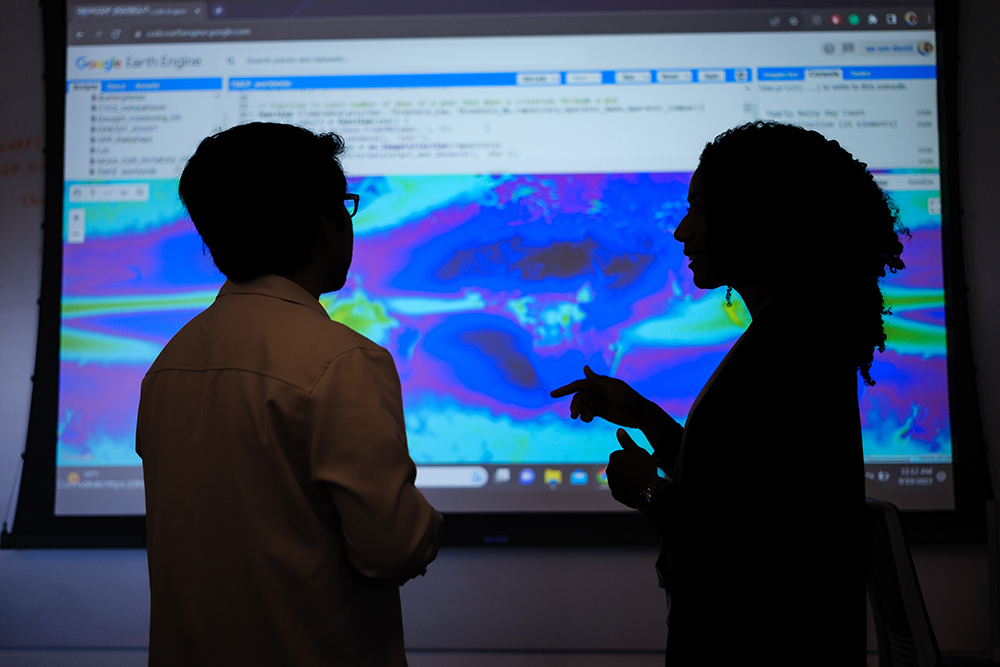
Join a Research Group
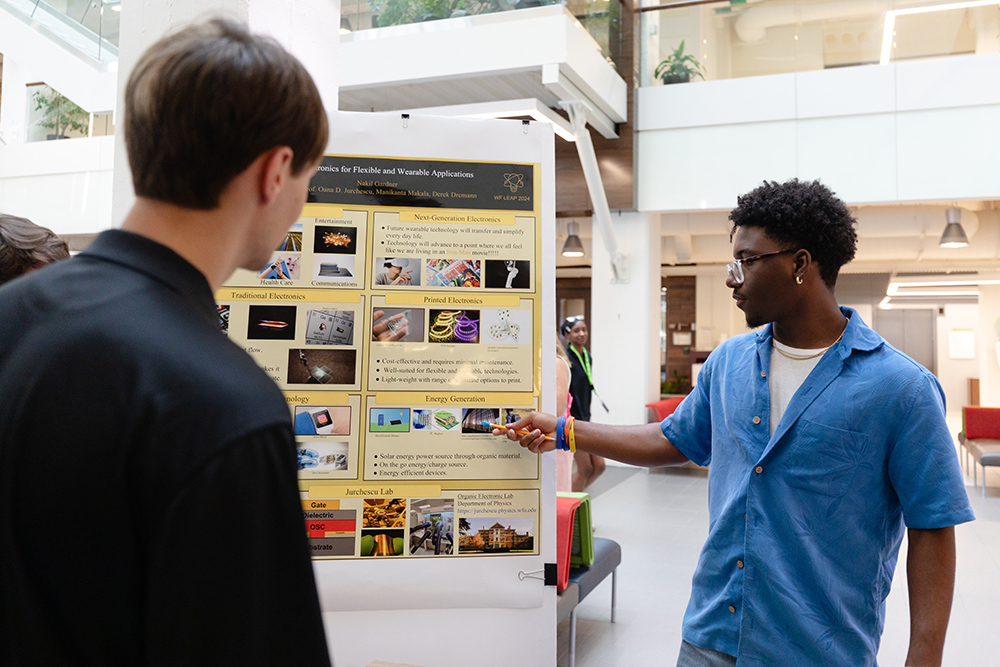
Society of Physics Students