
Wake Physics graduates use quantitative modeling, data analysis, and evidence-based reasoning in data science, engineering, finance, research and development, government, and academia.
$166,290
Median annual salary for U.S. physicists (May 2024)
70%
of physicists work outside of academia or the government
4%
Expected growth rate for physicists (2024–2034)
Where do Physics Deacs go?
Industry
Of the Wake Physics undergraduates represented in our outcomes data, 49% entered the job market. Among those graduates, 31% became data analysts and 20% entered research and development.
Our PhD students find positions in R&D in industry, as postdocs, or as faculty in a variety of institutions.
Graduate & Professional Programs
Among Wake Physics undergraduates represented in our outcomes data, 51% continued their education immediately after graduation; 82% of this group entered graduate programs in physics, engineering, medical physics, or biomedical sciences.
Another 10% entered medical or dental school, and the remainder pursued business or law school.
Our M.S. graduates continue into Ph.D. programs.
2026–27
Career Advising Events
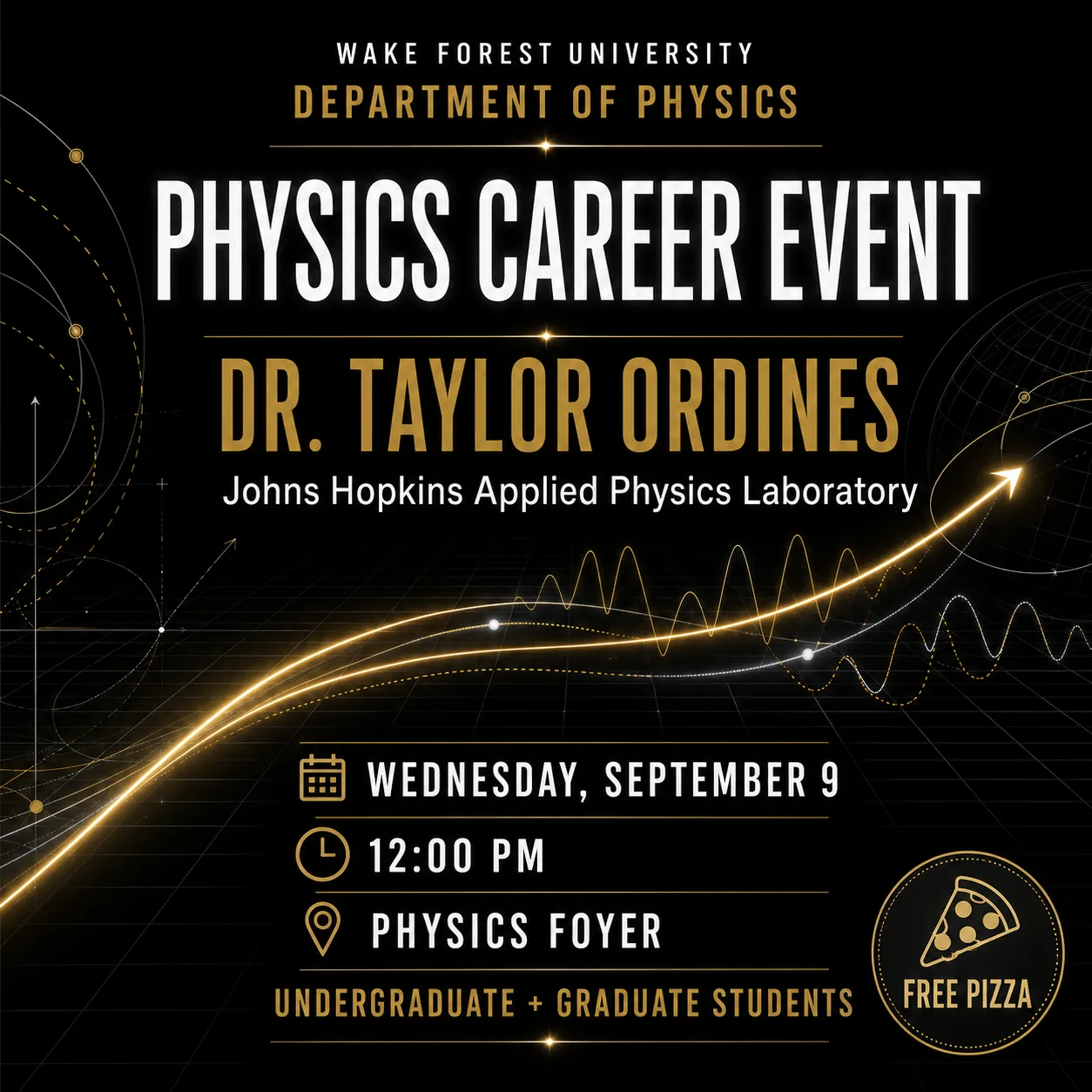
Physics Career Event with Dr. Taylor Ordines
Wednesday, September 9, 2026 – Physics Foyer, Noon
Dr. Taylor Ordines of the Johns Hopkins Applied Physics Laboratory will speak with Wake Forest Physics undergraduate and graduate students about career paths and work at APL. Ordines completed graduate study in the Wake Forest Department of Physics. Free pizza will be provided.
Attention Students and Alumni!
Handshake is your primary gateway to WFU-specific career opportunities and resources.
CAREER OUTCOMES
Our Students Go into Industry
Private Industry
Employers in engineering, finance, information technology, consulting, data science, and machine learning hire physics graduates for quantitative analysis, modeling, and evidence-based problem solving.
Here’s a sampling of where some WFU physics majors are working:


Government
Among the most common government positions for physicists include medical physicists and physical scientists. Medical physicists apply physics concepts in healthcare, in ensuring the safe and effective use of screening equipment and radiation therapy. Physical scientists work in laboratories to study natural phenomena and analyze and conduct research.
Government-funded laboratories include the CDC and DOD, while NASA attracts majors in engineering and science, especially aeronautics and aeronautical engineering.
Here’s a sampling of where some WFU physics majors are working:


Explore Physics Jobs:
-

Alumni Spotlight – Jason Grigsby
Meet Dr. Jason Grigsby, Wake Forest Physics Ph.D. class of 2009. Dr. Grigsby has traversed a…
HIGHER EDUCATION
Our Students are Graduate Professionals
Academia
Students who continue their education pursue graduate programs in physics, engineering, medical physics, biomedical science, and related fields. Physics graduates who earn Ph.D.s may continue into postdoctoral research or take positions in universities, national laboratories, and industry. Others attend medical, dental, business, or law school.
Here’s a sampling of where some WFU physics majors are attending:


-

Alumni Spotlight – Shane Hutson
Shane Hutson was once an undergraduate student in the Wake Forest Department of Physics. Now he’s…