Ph.D. in Physics
The Physics Ph.D. combines advanced coursework with original research in biophysics, condensed matter and materials physics, or astrophysics. Students join faculty research groups, use experimental and computational facilities, publish their work, and present at conferences. Graduates go on to positions in academia, national laboratories, and industry.
Application Deadline:
The deadline for Fall 2027 is January 8, 2027.
We now accept the Duolingo test for English proficiency.
We are GRE-optional.
We require Zoom interviews for PhD applications.
PH.D. CURRICULUM
The Physics Academic Program
Unless satisfactorily completed elsewhere, all PhD students are required to complete:
- Physics 711 (Math Methods and Classical Mechanics); Physics 712 (Electromagnetism); Physics 741 & 742 (Quantum Mechanics I & II); Physics 770 (Statistical Physics and Thermodynamics); and participation in the Department seminar Physics 601 (Physics Seminar) for seven semesters.
- Three more elective courses (3 credit classes) at the graduate level (600 and 700 level), at least one of which must be in Physics. These courses are intended to strengthen a student’s background in a specific area of concentration and assist in dissertation research. Coursework is discussed and approved by the student’s advisor with the assistance of the Research Advisory Committee (RAC).
- Physics 891/892 (Dissertation research).
The preliminary-examination requirements below apply to students entering Fall 2026 or later. Students who entered before Fall 2026 should follow the pre-Fall-2026 requirements in the Graduate Student Handbook.
The preliminary examination has written and oral components.
Written examinations. The examinations are administered as final examinations in Physics 711 and Physics 741 during the fall semester and in Physics 641 and Physics 712 during the spring semester. Each examination may be retaken once the next time the course is offered.
Oral examination. During the fall semester of the second year, the student presents and defends a dissertation research proposal at the first Research Advisory Committee (RAC) meeting. The RAC is appointed by the Graduate Program Director and consists of the student’s research advisor and two other members of the Physics Graduate Program. A member from another graduate program may be appointed with approval.
If the oral examination is failed, one re-examination may be allowed no sooner than six months later. Failure of a written examination on the second attempt or failure of the oral re-examination results in a recommendation for dismissal from the PhD program; continuation in the MS program may be considered.
The research advisory committee meets annually in the fall with the student to ensure timely progress toward the degree. The annual report is due by December 5.
A student is admitted to degree candidacy by the dean of the Graduate School after a recommendation by the Physics graduate program director. The student must have passed the preliminary exam (both written and oral parts).
Under the supervision of the research advisory committee, the candidate prepares a dissertation embodying the results of investigative efforts in the field of concentration. This dissertation is presented orally in a public talk and is then defended orally in a private defense.
The examining committee for the dissertation, which is appointed by the dean of the Graduate School upon recommendation of the program director, consists of at least the following five members of the graduate faculty: 1) The program director or a faculty member chosen by the program director; 2) the student’s advisor; 3) another member of the physics graduate program; 4) a representative from a different area of concentration from within the program or from outside the program; and 5) a member from outside the physics graduate program, who represents the Graduate Council and who serves as chair of the committee.
Typically, a PhD student would have about five peer-reviewed publications of which three are first-author publications. However, this amount can vary considerably depending on the research field and should be discussed with the advisor and the research advisory committee.

Certificate in Structural and Computational Biophysics
SCB is designed to meet the need for next generation scientists and educators with broad, interdisciplinary training in the quantitative biological, biochemical, and biomedical sciences. Students who successfully complete the SCB Track and degree requirements will receive a certificate in Structural and Computational Biophysics, as well as the degree in the program in which they matriculate.
RESEARCH
Hands-on Experience
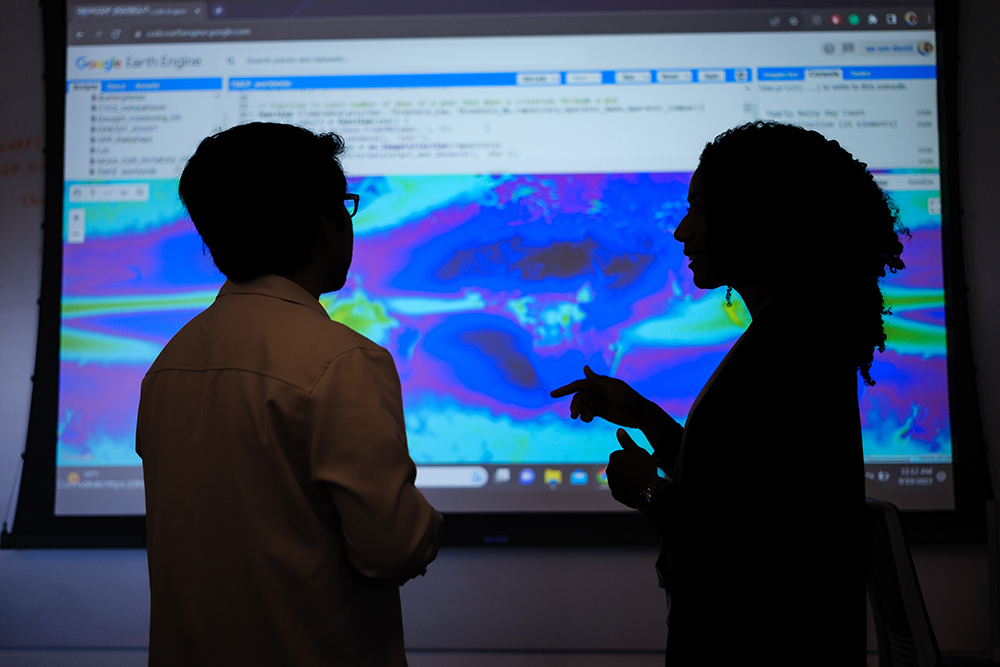
Join a Research Group
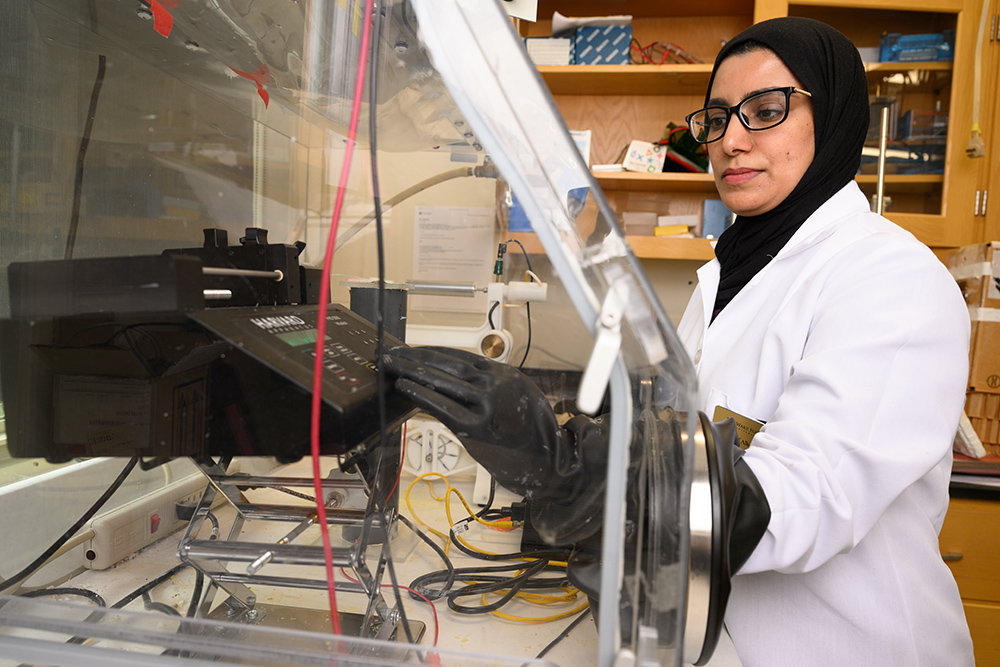
Special and Interdisciplinary Programs