M.S. in Physics
The Physics M.S. combines graduate coursework with a faculty-supervised thesis in one of the department’s three research areas. Students gain experience conducting and communicating original research and may continue to Ph.D. study or pursue technical work in industry. Most students who enter this program move on to Ph.D. programs at Wake Forest or elsewhere.
Application Deadline:
The deadline for Fall 2027 is January 8 2027.
We no longer require the general or subject GRE.
M.S. CURRICULUM
The Physics Academic Program
A Master of Science degree candidate must have a minimum of thirty semester hours of graduate credit (600 level classes or higher). This minimum requirement can include no more than 7.5 hours of research. Seminars other than up to 1.5 hours of Physics 601 (Physics Seminar) do not count toward the minimum course requirements.
The course of study consisting of classes, seminars, and research is compiled by a group including the student, the student’s advisor, and the program director, and must include:
- Physics 711 (Math Methods and Classical Mechanics); Physics 712 (Electromagnetism); Physics 741 (Quantum Mechanics I); and 1.5 hours of Physics 601 (Physics Seminar)
- At least 7.5 credit hours of research (Physics 791/792).
- At least 12 credit hours of additional physics graduate coursework. Research or seminars do not count towards these hours.
- At least 12 hours of physics coursework, in addition to research, must be at the 700 level.
There is no preliminary exam for Master’s students.
Under faculty supervision, the student prepares a thesis embodying the results of investigative efforts in the field of concentration. This thesis is presented orally in a public talk and is then defended orally in a private defense.
The examining committee for the thesis which is appointed by the dean of the Graduate School upon recommendation of the program director consists of at least the following three members of the graduate faculty: 1) the student’s advisor; 2) another member of the physics graduate program who acts as the chair; 3) a representative from a different area of concentration from within the program or from outside the program.

Certificate in Structural and Computational Biophysics
SCB is designed to meet the need for next generation scientists and educators with broad, interdisciplinary training in the quantitative biological, biochemical, and biomedical sciences. Students who successfully complete the SCB Track and degree requirements will receive a certificate in Structural and Computational Biophysics, as well as the degree in the program in which they matriculate.
RESEARCH
Hands-on Experience
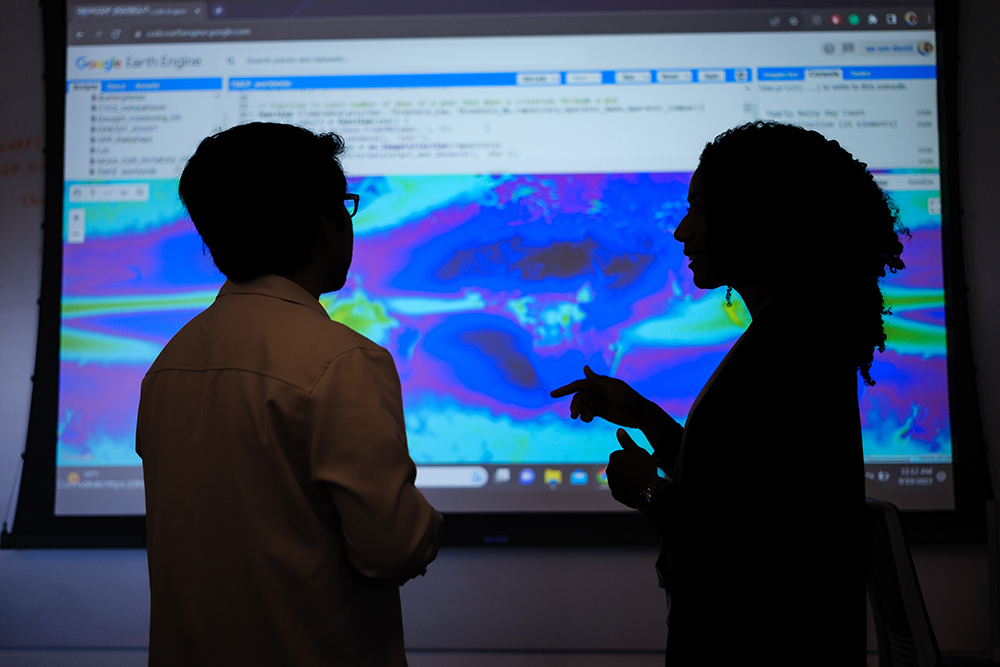
Join a Research Group
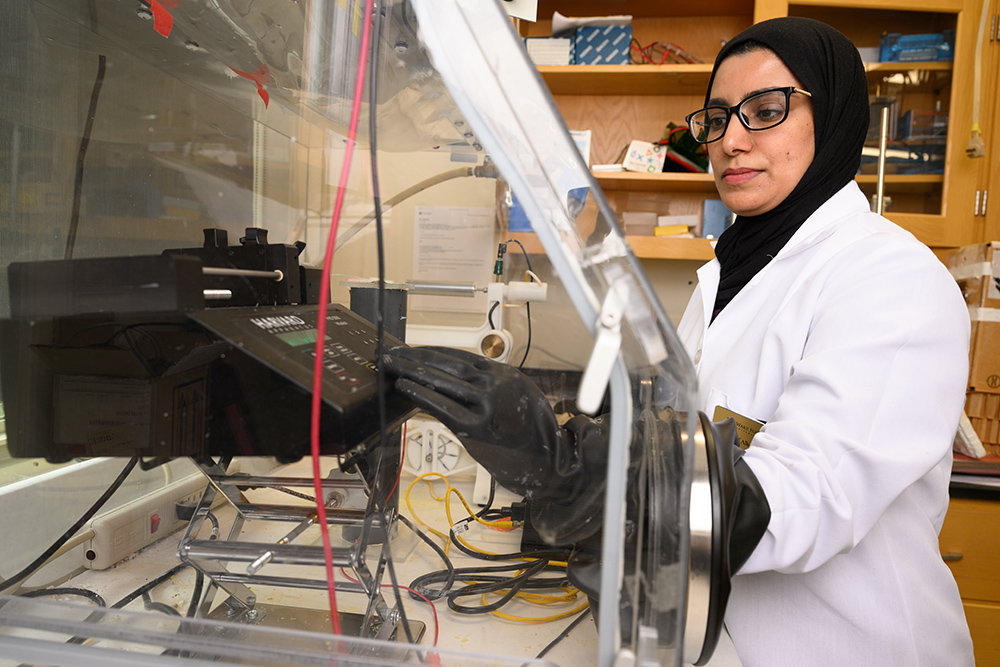
Special and Interdisciplinary Programs