
Wake Forest researchers study organic and flexible electronics, quantum materials, ultrafast spectroscopy, solid-state batteries, and the computational design of materials. Experimental and theoretical groups work together to understand how materials behave and how their properties can be controlled.
SCHOLARSHIP
Faculty working in Condensed Matter

Oana D. Jurchescu
Baker Physics Professor
Condensed Matter
Experimental condensed matter physics, organic and flexible electronics
217 Olin Physical Laboratory | Lab: 209B Olin Physical Laboratory
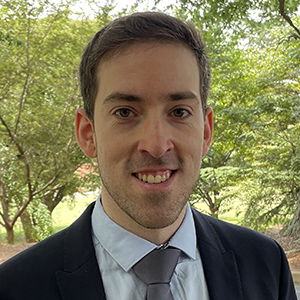
Stephen M. Winter
Associate Professor of Physics
Condensed Matter
Theoretical condensed matter physics
214 Olin Physical Laboratory

David Carroll
Professor of Physics
Condensed Matter
Nanostructures, low-dimensional systems, biotechnology, and microscopy
Office: 108A Olin Physical Laboratory | Lab: Nanotechnology Center

Ajay Ram Srimath Kandada
Assistant Professor of Physics and ZSR Foundation Faculty Fellow
Condensed Matter
Experimental condensed matter physics
212 Olin Physical Laboratory | Lab: 209A Olin Physical Laboratory
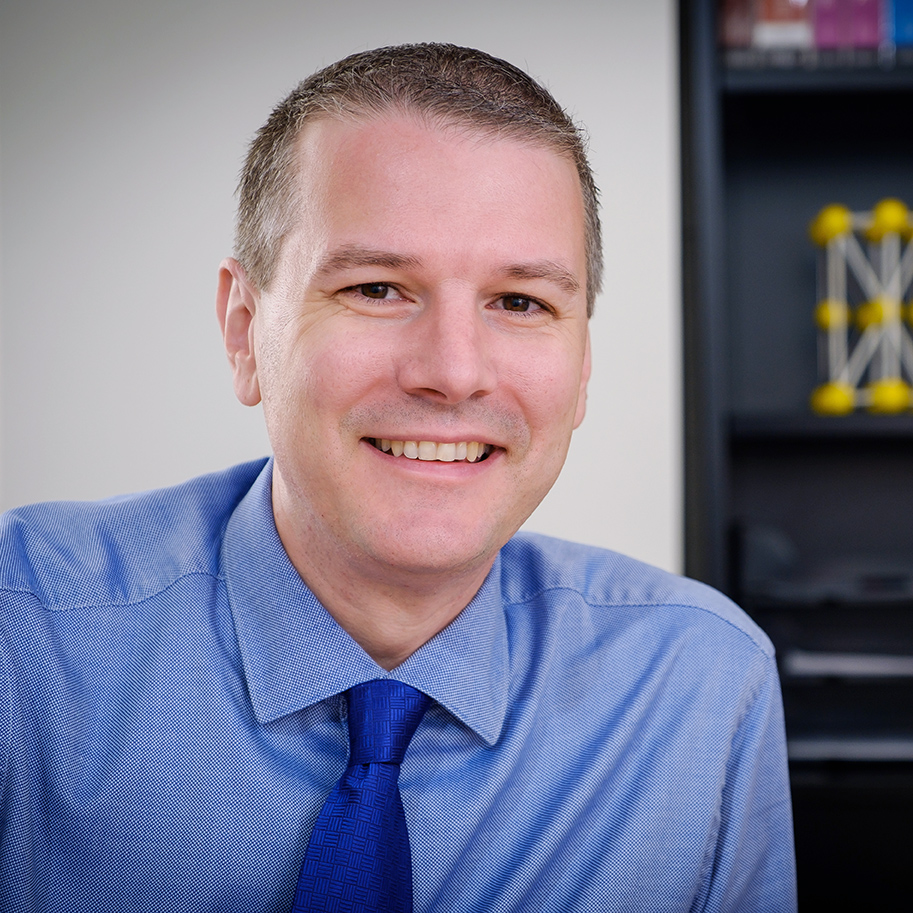
Timo Thonhauser
Wright Family Professor of Physics and Director of Center for Functional Materials, Associate Chair
Condensed Matter
Theoretical and computational condensed matter physics
303A Olin Physical Laboratory
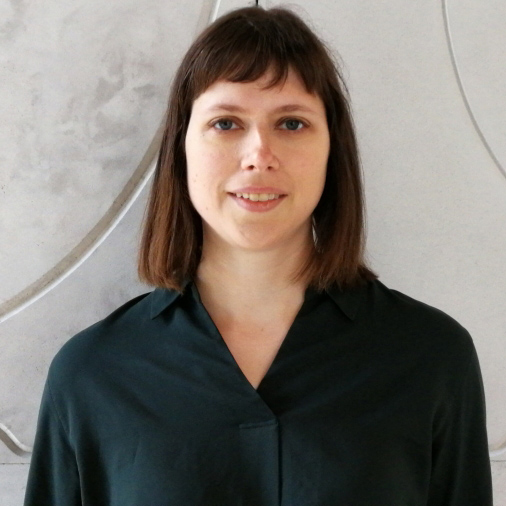
Emilie Huffman
Assistant Professor of Physics
Condensed Matter
Computational condensed matter and lattice field theory
308 Olin Physical Laboratory
K. Burak Üçer
Research Associate Professor
Condensed Matter
Ultrafast laser physics and spectroscopy, optical materials
305D Olin Physical Laboratory

Swathi Kadaba
Research Assistant Professor

Natalie A. W. Holzwarth
Research Professor (Retired)
Condensed Matter
Theoretical solid state physics, computer simulations of electronic and structural properties of solids
300 Olin Physical Laboratory

William C. Kerr
Research Professor and Emeritus Professor
Condensed Matter
Theoretical solid state and statistical physics, computer simulation studies of phase transitions, and soliton effects in condensed matter
216 Olin Physical Laboratory
Oana Jurchescu
Oana Jurchescu’s laboratory focuses on the study of charge transport in organic and halide perovskite electronic materials. They study single crystals of small molecule organic semiconductors to elucidate their intrinsic properties, establish the potential and limit of their use, and provide feedback for material and device design. A significant component of their effort is aimed at understanding the fundamental aspects of charge transport in these materials and how processing impacts the quality of various interfaces in devices.

Accepting graduate students
Accepting undergraduate students
Steve Winter
Steve Winter’s group concentrate on theoretical condensed matter physics in the area of quantum materials. These are systems where macroscopic quantum effects manifest in the material properties, with prominent examples including quantum magnets, superconductors, and topological insulators. We use a variety of theoretical approaches to try to model experiments on real materials, as well as classify and predict new quantum phases.
Accepting graduate students
Accepting undergraduate students
David Carroll
David Carroll’s group explores the fundamental roles that dimension, topology, and symmetry play in the emergent properties of low dimensional condensed matter systems and so called “quantum materials.” Additionally, recently, quantum computing research has focused on the development of massively parallel and neuromorphic architectures in Q-registers based on topologically stabilized Qbits.
Accepting graduate students
Accepting undergraduate students
Ajay Ram Srimath Kandada
Ajay Ram Srimath Kandada’s group investigates the chemical and physical factors that govern these dynamics in a wide class of materials through advanced optical spectroscopic techniques. Their experimental toolbox is composed of sources of ultrashort optical pulses and quantum-entangled photons in the visible and near-infrared spectral regions and spectroscopic systems to measure optical coherences in materials. The group’s primary interest lies in the coherent dynamics and control of excitons in two-dimensional materials.
Accepting graduate students
Accepting undergraduate students
Timo Thonhauser
Timo Thonhauser’s group conducts research in theoretical and computational condensed-matter physics and materials science with a focus on the development of ab-initio electronic-structure methods and their application to bio-, nano-, and energy-related materials. These theoretical studies go hand-in-hand with experimental research and provide the necessary framework to understand the behavior and characteristics of materials.
Accepting graduate students
Accepting undergraduate students
Emilie Huffman
Dr. Emilie Huffman’s work involves calculations for interacting fermions (general particle class that includes electrons) and quantum spins on both classical and quantum computers, and the common thread is that each calculation must use some kind of basis of discrete variables suited to computers. This is most commonly a spatial lattice. The particles can exist at the lattice points, but nowhere in between.
Accepting graduate students
Accepting undergraduate students
K. Burak Üçer
K. Burak Üçer uses the tools of ultrafast spectroscopy and microscopy to investigate exciton dynamics, quantum effects in a wide range of materials systems including metal halide perovskites, transition metal dichalcogenides and scintillators in the subnanosecond and submicron scales.

Accepting graduate students
Accepting undergraduate students
Swathi Kadaba
Under the umbrella of experimental materials science research, Dr. Kadaba works on understanding semiconductor device physics for efficient electronics. Her focus is especially on soft electronics, which includes conjugated polymers for organic electronic devices, and other thin-film-based material composites that enable flexible electronic devices. Towards this goal, she has experience in large-area thin-film processing and in the development and characterization of thin films tailored for an application.
Dr. Kadaba interfaces with experimental condensed matter research groups in the physics department and the organic and inorganic synthesis groups in the chemistry department to contribute expertise to projects on thin film and/or device fabrication.
Accepting graduate students
Accepting undergraduate students
N. A. W. Holzwarth
N. A. W. Holzwarth’s group concentrates on the development and use of computational tools to model the fundamental and technological properties of materials. Realistic simulation and modeling tools are essential for understanding the basic properties of materials and for designing materials for technology. The research addresses the need for the development of algorithms and codes for modeling complex materials; recently focused on modeling solid electrolyte materials for solid state battery technology.
Not accepting graduate students
Accepting undergraduate students
William Kerr
Research professor William Kerr studies spin effects in semiconductor transport.
Accepting graduate students
Accepting undergraduate students
Recent Publications in Condensed Matter
- Koch, K., Gomez-Dominguez, M., Rojas-Gatjens, E., Evju, A., Ucer, K. B., Correa-Baena, J.-P., & Srimath Kandada, A. R. (2025). Estimating thermal dephasing of excitons in 2D metal halides via two-dimensional spectroscopy. Physical Chemistry of Semiconductor Materials and Interfaces XXIV, 4. https://doi.org/10.1117/12.3063938
- Li, Y., Kerr, W. C., & Holzwarth, N. A. (2019). Continuity of phonon dispersion curves in layered ionic materials. Journal of Physics: Condensed Matter, 32(5), 055402. https://doi.org/10.1088/1361-648x/ab4cc1
- Maiti, S., Banerjee, D., Chakraborty, B., & Huffman, E. (2025). Spontaneous symmetry breaking in a 𝑆𝑂(3) non-Abelian lattice gauge theory in 2+1D with quantum algorithms. Physical Review Research, 7(1). https://doi.org/10.1103/physrevresearch.7.013283
- Lieberich, F., Saito, Y., Agarmani, Y., Sasaki, T., Yoneyama, N., Winter, S. M., Lang, M., & Gati, E. (2025). Probing and tuning geometric frustration in an organic quantum magnet via elastocaloric measurements under strain. Science Advances, 11(33). https://doi.org/10.1126/sciadv.adz0699
- Lynch, D. C., Li, Y., Canepa, P., & Holzwarth, N. A. (2024). Computational investigation of the structural and electrolyte properties of the extended family of lithium (thio)boracite materials: Li4B7O12Cl and beyond. Physical Review Materials, 8(6). https://doi.org/10.1103/physrevmaterials.8.065401
- Dambal, S., Kandada, A. R., & Bittner, E. R. (2025). Quantum spectroscopy with biphotons: Lyapunov-based input-output dynamics. Physical Review A, 112(5). https://doi.org/10.1103/wgnx-l7qx
- Guo, F., Ullah, S., Zhou, K., Li, X.-Y., Li, S., Mao, S., Thonhauser, T., Tan, K., Li, J., & Wang, H. (2025). Carbon dioxide capture by a hydrothermally synthesized water-resistant zinc-oxalate-aminotriazolate framework. Inorganic Chemistry, 64(32), 16504–16513. https://doi.org/10.1021/acs.inorgchem.5c02499
- Yin, Z., Li, S., Li, X., Shi, W., Wang, A., Yu, C., Shi, X., Carroll, D. L., & Ma, C. (2024). Effect of ph on the microstructure and antibacterial properties of mgo nanoparticles by microwave-assisted solution combustion. Journal of Alloys and Compounds, 1009, 176858. https://doi.org/10.1016/j.jallcom.2024.176858
- Novak, J. C., Makala, M., MacKenzie, E. L., Coropceanu, V., Agosto, K., Moravek, A. A., Jurchescu, O. D., & Wiscons, R. A. (2025). Charge transport in ternary charge‐transfer solid solution single crystals. Advanced Functional Materials. https://doi.org/10.1002/adfm.202523425