
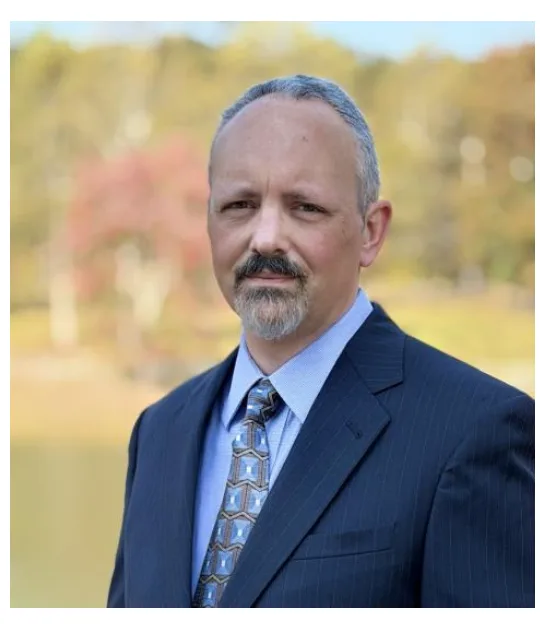
Eric Chapman will defend his dissertation!
Eric Chapman will defend his PhD dissertation on Thursday, July 9, 2026, at 1:00 PM, in ZSR Library 404.
All are invited!
MODELING MOLECULAR FILTERS WITH DENSITY FUNCTIONAL THEORY
Our understanding of quantum mechanics has now provided accurate atomic-scale models of materials allowing for in-depth studies and engineering of many novel functional materials finding impactful application in many areas of society. The mitigation of energy-intensive industrial gas separations represents a critical frontier both in modern chemical engineering as well as environmental sustainability. Industrial gas separation and purification is crucial as these gases are often the fundamental feedstock for plastics, petrochemical and other chemical products. Traditional gas separation methods are energy intensive, require large capital investment and are often environmentally damaging. In the search for alternative approaches to overcome these problems, novel nanoporous materials—specifically metal-organic frameworks (MOFs) and hydrogen-bonded organic frameworks (HOFs)—show exceptional promise due to their high surface areas and tunable pore environments. Development and optimization of these materials require a fundamental, atomistic understanding of the structures and interactions with guest molecules that dictate thermodynamic selectivity and transport kinetics. This dissertation utilizes ab initio quantum mechanical modeling at the density functional theory (DFT) level to investigate, explain, and actively manipulate the electronic behaviors governing molecular filtration within advanced porous frameworks. These first principle calculations provide critical atomic-scale resolution that directly complements and explains macroscopic observations from experimental techniques. Leveraging DFT, with van der Waals corrections and methods such as transition-state searches and vibrational analyses, I investigate and manipulate the electronic behaviors governing molecular filtration. A central theme of this research is the conceptualization and validation of a co-adsorption strategy to enhance selectivity in otherwise nonselective frameworks. By pre-loading the MOF Co-MOF-74 with ammonia, for example, we reconfigure the pore adsorption environment allowing C2H2 to restrict the aperture blocking the otherwise chemically similar C2H4. This tremendous finding was inspired by an earlier co-authored work in which we found that hydrogen bonding was the mechanism by which the barrier to diffusion for small molecules in MOFs was substantially increased by such a modification. A later project introduces HOFs to the selectivity landscape offering hydrophobic alternative materials capable of similar separation performance. Continuing the concept, I have begun exploring a completely different modification to MOF-74 via introduction of C60 as a means of altering diffusion pathways in pursuit of molecular selectivity. Finally, an additional, unrelated project introduces a novel spray-deposition process to the field of organic field-effect transistors.