
Wake Forest University Celebrates the successful Artemis II space mission
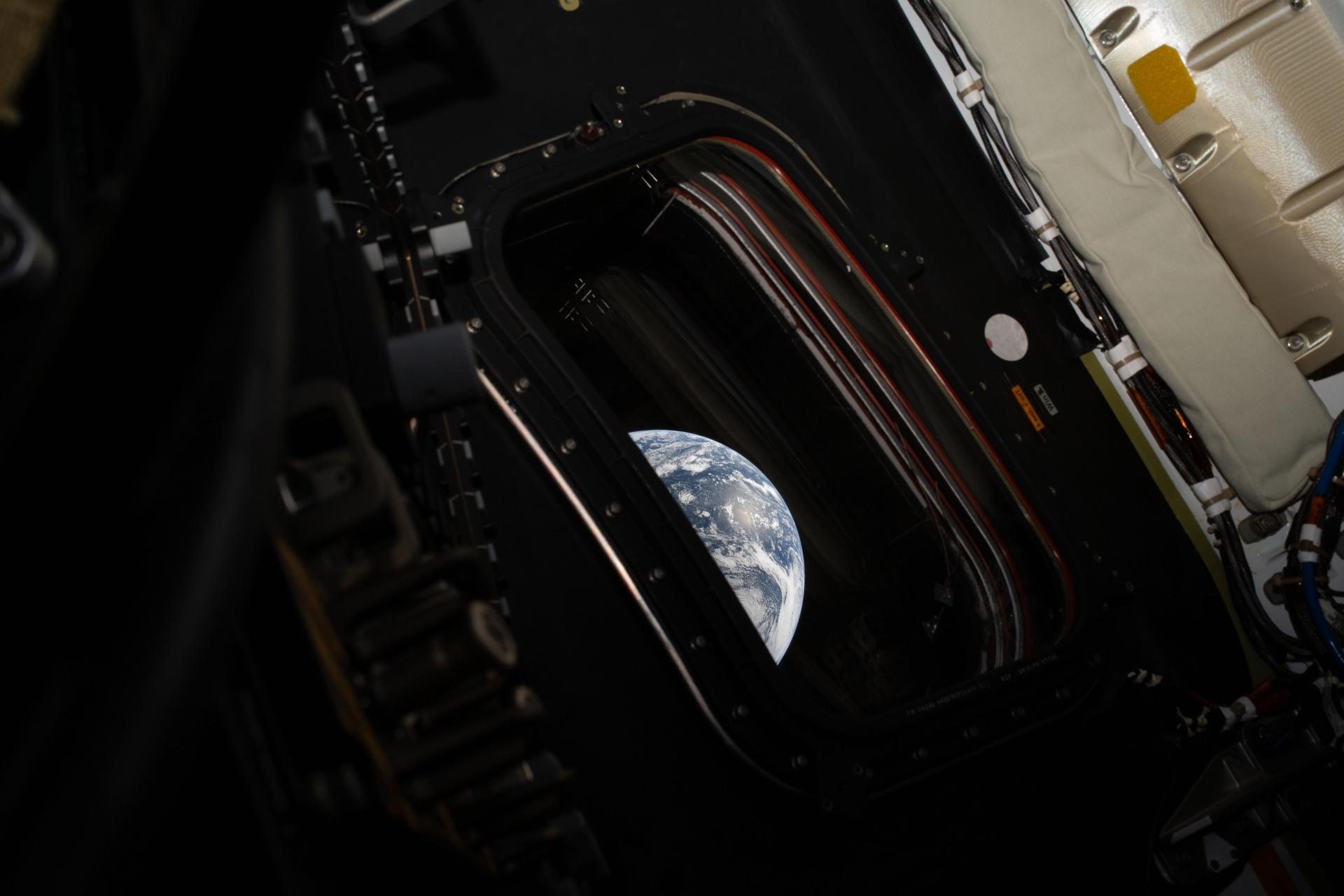
On Friday April 10, 2026 at approximately 5 PM local time, the Artemis II space capsule splashed down in the Pacific Ocean after an incredible, nearly flawless 10 day mission. In less than 2 hours, the four heroic astronauts emerged from the capsule in good health. From the launch on April 1, 2026 from the Kennedy Space Flight Center in Florida, to an orbit around the earth, to an escape from earth’s gravity and an orbit around the moon, to the return trajectory, numerous high quality images and valuable data was recorded; the equipment involved with the mission was monitored at every stage. Under the leadership of NASA, this mission was made possible by an impressive collaboration involving private companies, governmental organizations, and universities, using developments in basic science and mathematics, numerical analysis and computer science, and advanced engineering. This international and interdisciplinary collaboration, starting in 2007 with the Artemis I project, with the success of Artemis II, is continuing towards Artemis III and beyond. The detailed images and observations of the earth and its moon resulting from the Artemis II mission offers inspiration to all of earth’s inhabitants and lifts the human spirit. The following image is a photo of Earth taken by Artemis II commander Reid Wiseman.
As we celebrate the milestone success of the Artemis II mission, we note the specifically North Carolina connection of Astronaut and Mission Specialist Dr. Christina Koch being educated in North Carolina (North Carolina High School of Science and Mathematics and North Carolina State University). There is also a specific connection to Wake Forest University through the work of Principal System Engineer from Honeywell Corporation, Dr. Yueping Zeng (WFU PhD in Physics 1997). Dr. Zeng has worked with Honeywell Corporation since 2004, focusing on developing and analyzing guidance, navigation and control systems for space flight applications. Honeywell is one of the many companies which collaborate with NASA. Since 2007, Dr. Zeng and his Honeywell colleagues have been participating in the Artemis program especially on the inertial measurement unit, an essential navigation tool, for the Orion space capsule (named “Integrity” by the Artemis II crew).