
Alejandro Cárdenas-Avendaño receives $384,000 NASA grant to study black hole inspirals
Prof. Alejandro Cárdenas-Avendaño, assistant professor of physics at Wake Forest University, has received a $384,000 NASA grant to study extreme mass-ratio inspirals: systems in which a small compact object spirals into a supermassive black hole, producing gravitational waves.
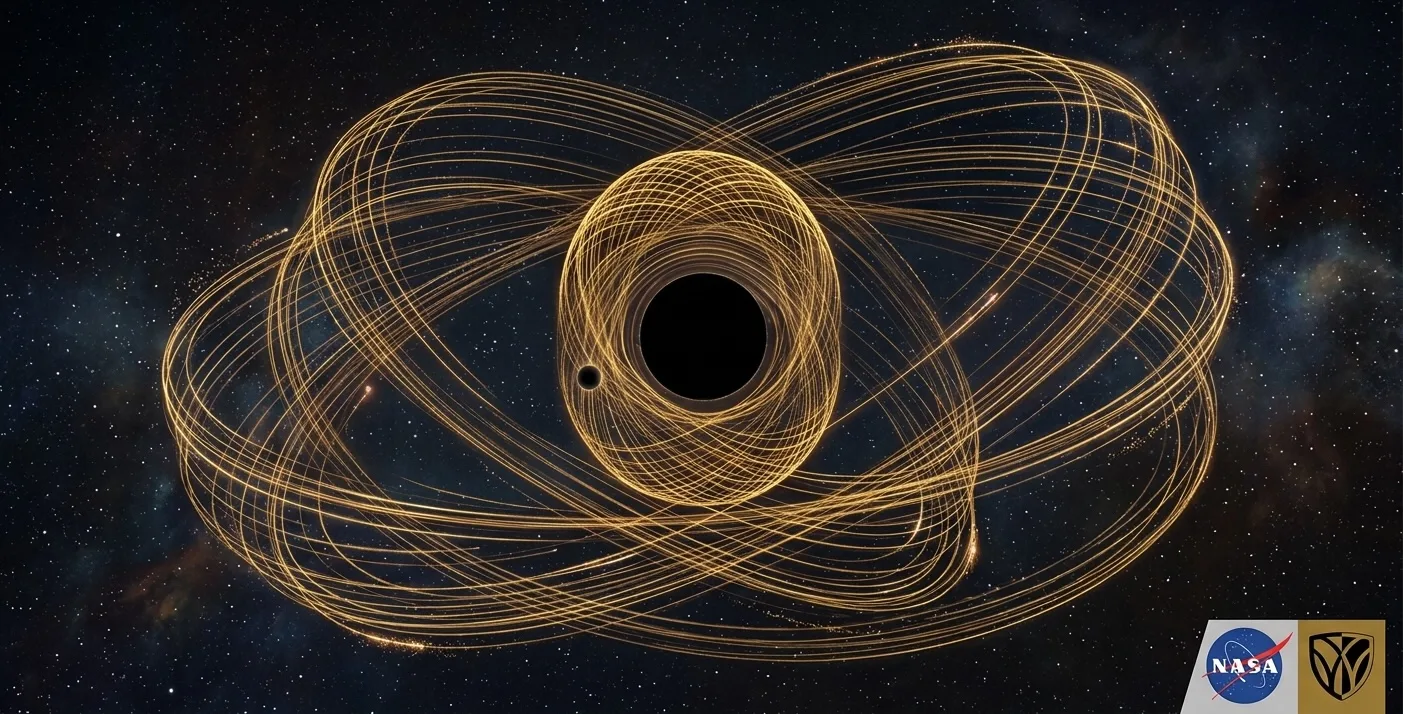
The project establishes a partnership between Wake Forest and NASA’s Marshall Space Flight Center to develop methods for analyzing these signals with the future Laser Interferometer Space Antenna (LISA), a space-based gravitational-wave observatory led by the European Space Agency with NASA as a major partner.
Cárdenas-Avendaño’s team will develop and test machine-learning methods for finding and interpreting gravitational-wave signals, checking how accurately they work when the underlying physical models are approximate. The project aims to produce open-source tools for future gravitational-wave measurements.
The grant supports two graduate students and two undergraduates, with direct research experience and on-site opportunities at Marshall Space Flight Center.